Overview
The American Council of Engineering Companies’ annual Engineering Excellence Awards celebrates projects from across the world which demonstrate innovation, creative problem-solving, and exemplify engineering’s capacity to improve the world.
Congratulations to the following Walter P Moore projects that were honored with a state award in their respective chapters.
Georgia
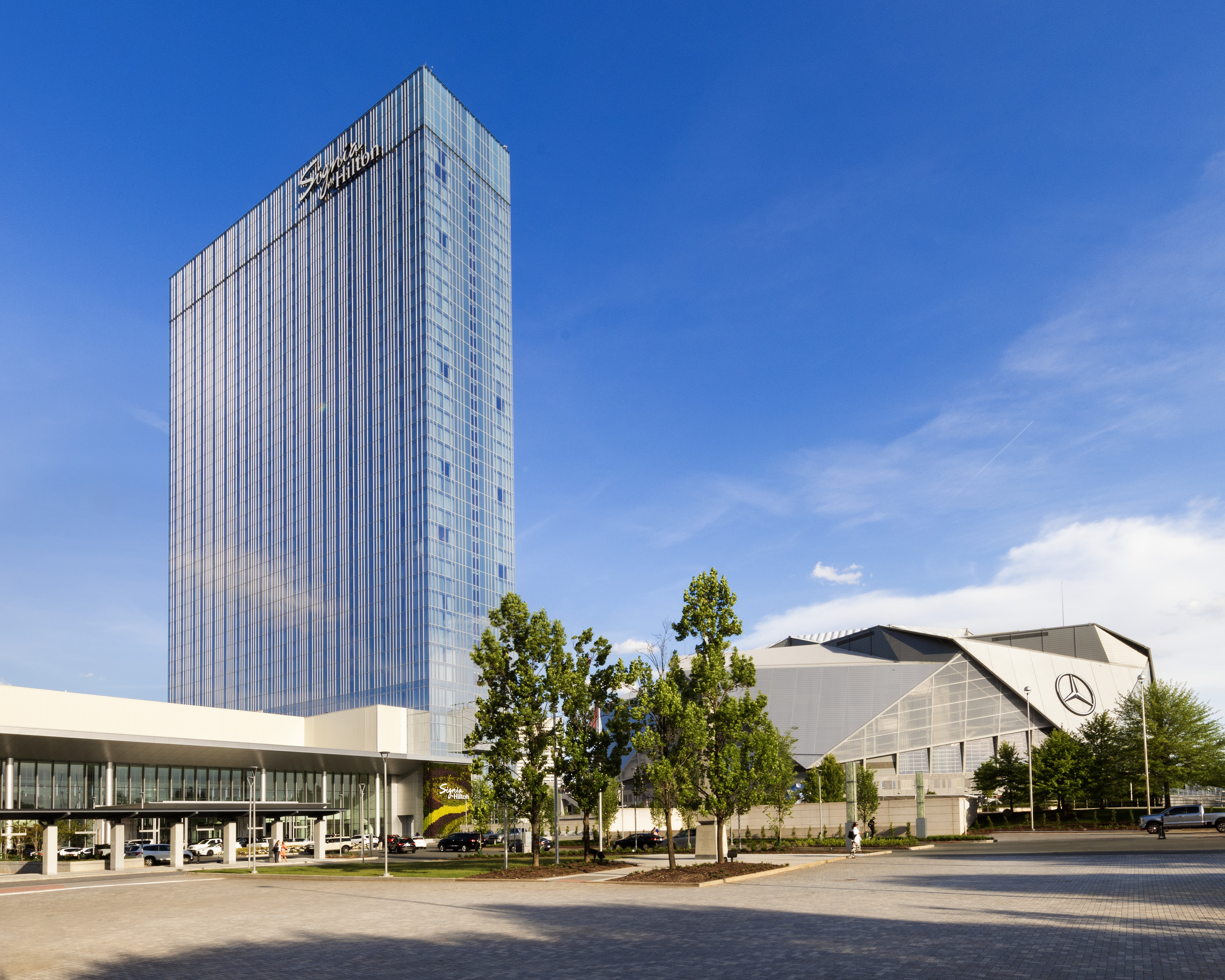
Signia by Hilton Atlanta Georgia World Congress Center and Convention Center Expansion | 2026 ACEC Georgia State Award & Grand Prize Award
The new 40-story Signia by Hilton Atlanta Georgia World Congress Center and Convention Center Expansion offers unparalleled views of downtown Atlanta. The remarkable structure was built on the former site of the Georgia Dome and reused more than 200 existing foundation piles after thorough assessment. The hotel features the state’s largest grand ballroom at 40,000 square feet, designed to attract global conventions, entertainment events, and corporate gatherings. To address vibrations within the ballroom, the design incorporated slender steel hanger posts that tied the ballroom floor to the structure below, allowing each level to act in unison. These innovative solutions conserved resources, reduced costs, and avoided modification to the existing deck. The project demonstrates our commitment to sustainability and sets a precedent for sustainable redevelopment of urban sites.
Kentucky
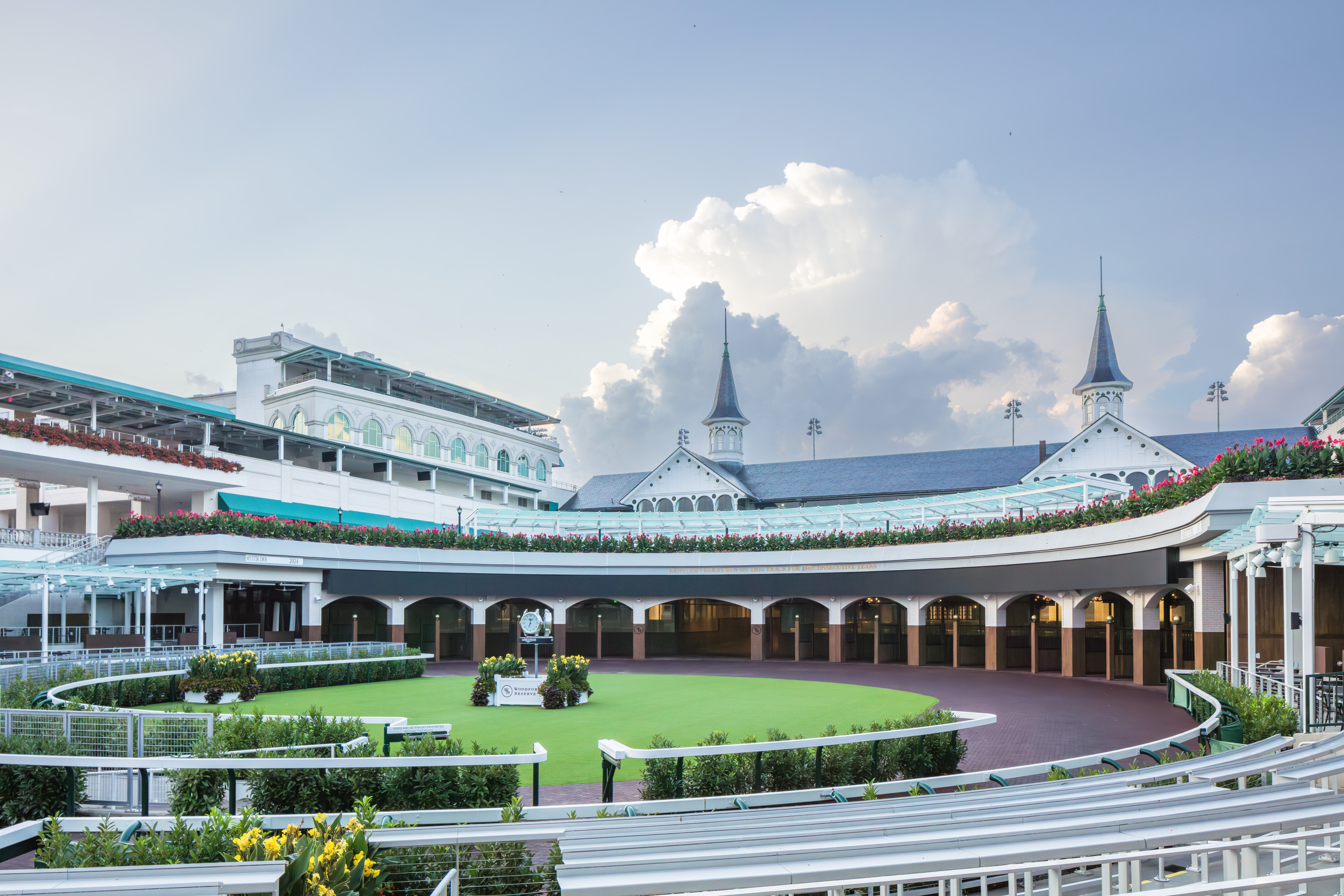
The New Paddock Experience at Churchill Downs | 2026 ACEC Kentucky State Award
The iconic Churchill Downs in Louisville home of the Kentucky Derby includes a new multi-level horseshoe-shaped mini-stadium that provides guests with a close-up view of the racehorses and jockeys. From the Starting Gate Suites to the First Turn Club and the Paddock Experience, our work has helped transform this historic racetrack while preserving its legacy. The design restored a clear sightline to the historic wooden Twin Spires previously obscured by earlier renovations. Using drone-based laser scanning, modeling techniques, and a digital twin, we reduced construction surprises and delays, keeping the $200 million project on schedule. The project also integrated a new multi-use, self-supporting structure among multiple existing buildings constructed in different eras using a split-clad structural system to create a hybrid structure that protects the paddocks and offers viewpoints on multiple levels along with luxury suites spaces.
Missouri
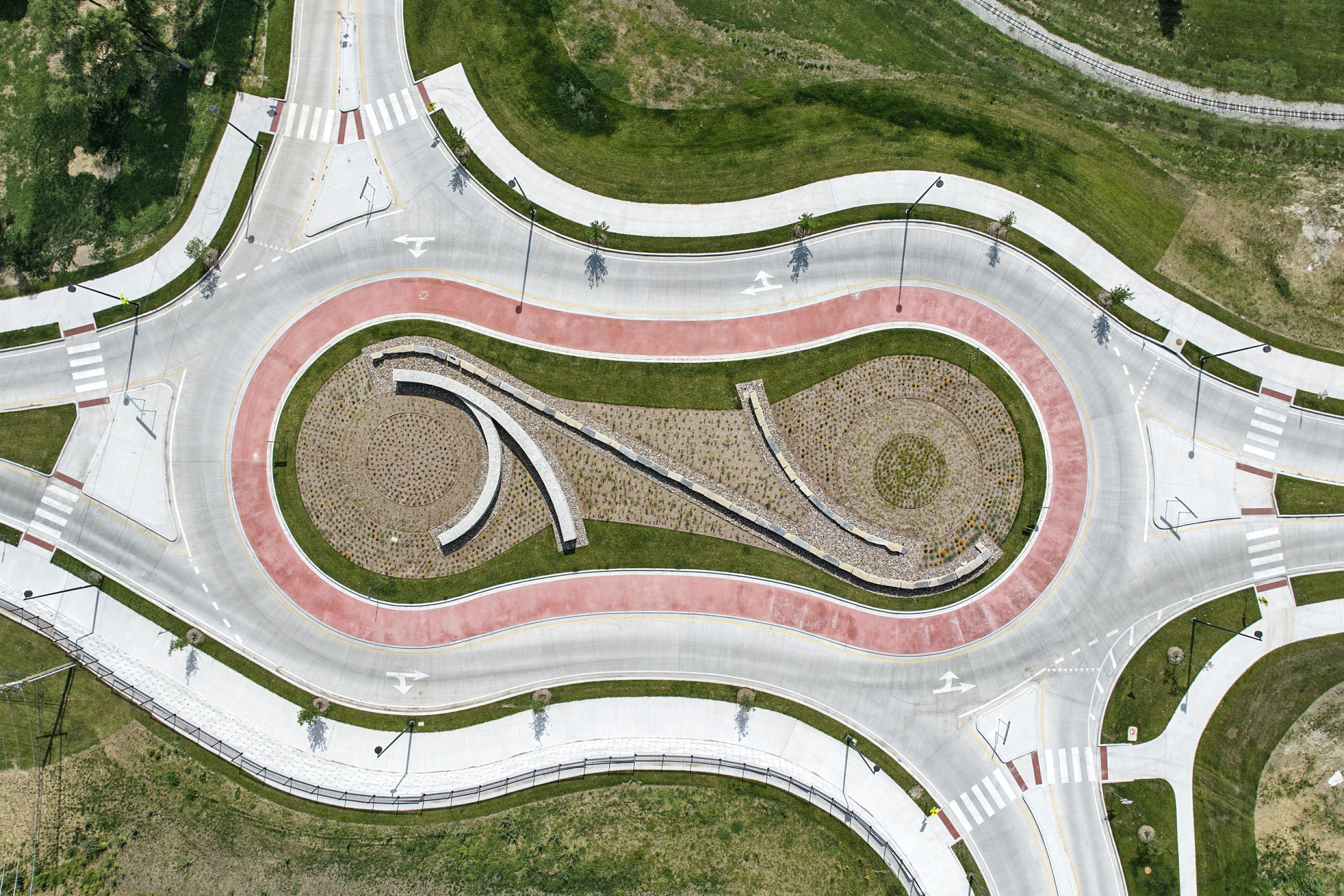
Northwest Waukomis Drive | 2026 ACEC Missouri Honor Award
The Northwest Waukomis Drive street improvement project transformed approximately 3,800 linear feet of a deteriorating two-lane north-south corridor in northern Kansas City. The existing roadway featured open drainage, limited storm sewers, no sidewalks, and no turn lanes. Following a comprehensive evaluation of pedestrian safety, traffic flow, school access, and the surrounding environment, the design incorporated bike lanes, sidewalks, and enhanced crossings into the revamped corridor. To address offset side streets, the design team developed a unique “peanut” roundabout—the first in the Kansas City metro area. A 10-foot-wide multi-use trail was also added along the east side, further enhancing mobility to improve safety and travel experiences for all users. Overall, the project improve safety, calmed traffic, and minimize property impacts while upgrading the corridor to modern boulevard standards.
Texas
University of Houston RAD Center | 2026 ACEC Texas Gold Medal Award
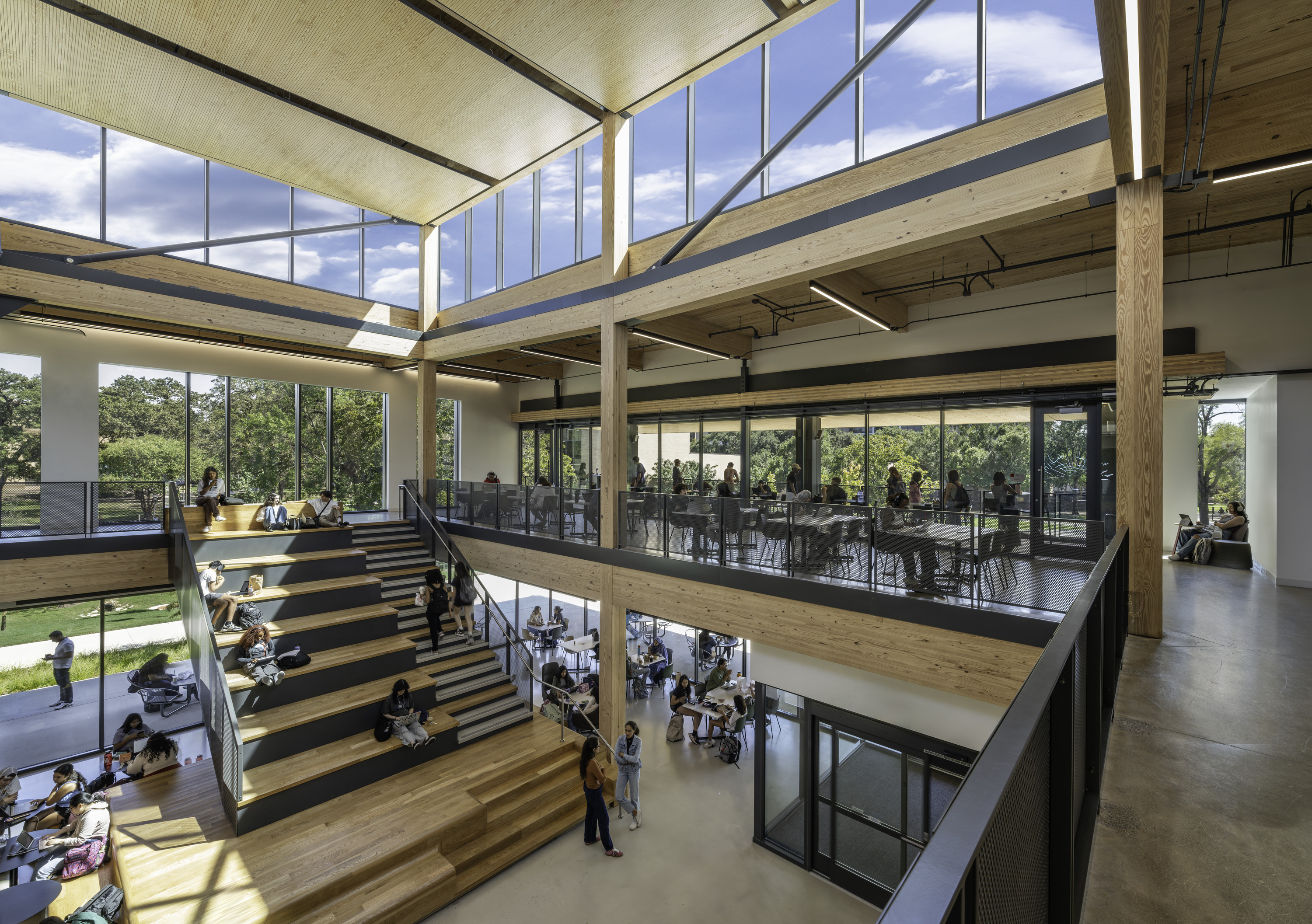
Located in the heart of the University of Houston’s campus, the Retail, Auxiliary, and Dining (RAD) Center was built atop the historic 1970s era underground Student Center Satellite Building. The dynamic space features six dining options, 400 indoor and outdoor seats, and various student amenities. Walter P Moore worked alongside the project architect, Perkins+Will, to develop a structural grid that aligned with the original grid and optimized it for a more sustainable mass timber option. Due to the lighter weight of the mass timber, we were able to creatively and economically reuse most of the existing foundations and columns from the old building. As the first mass timber building in the University of Houston system, our collaborative team was an integral part of advising the University facilities staff on the long-term durability of mass timber and reduced embodied carbon on the project. This achievement highlights our commitment to sustainable design and innovative engineering, making a lasting impact on the university and community.
Washington (Metro)
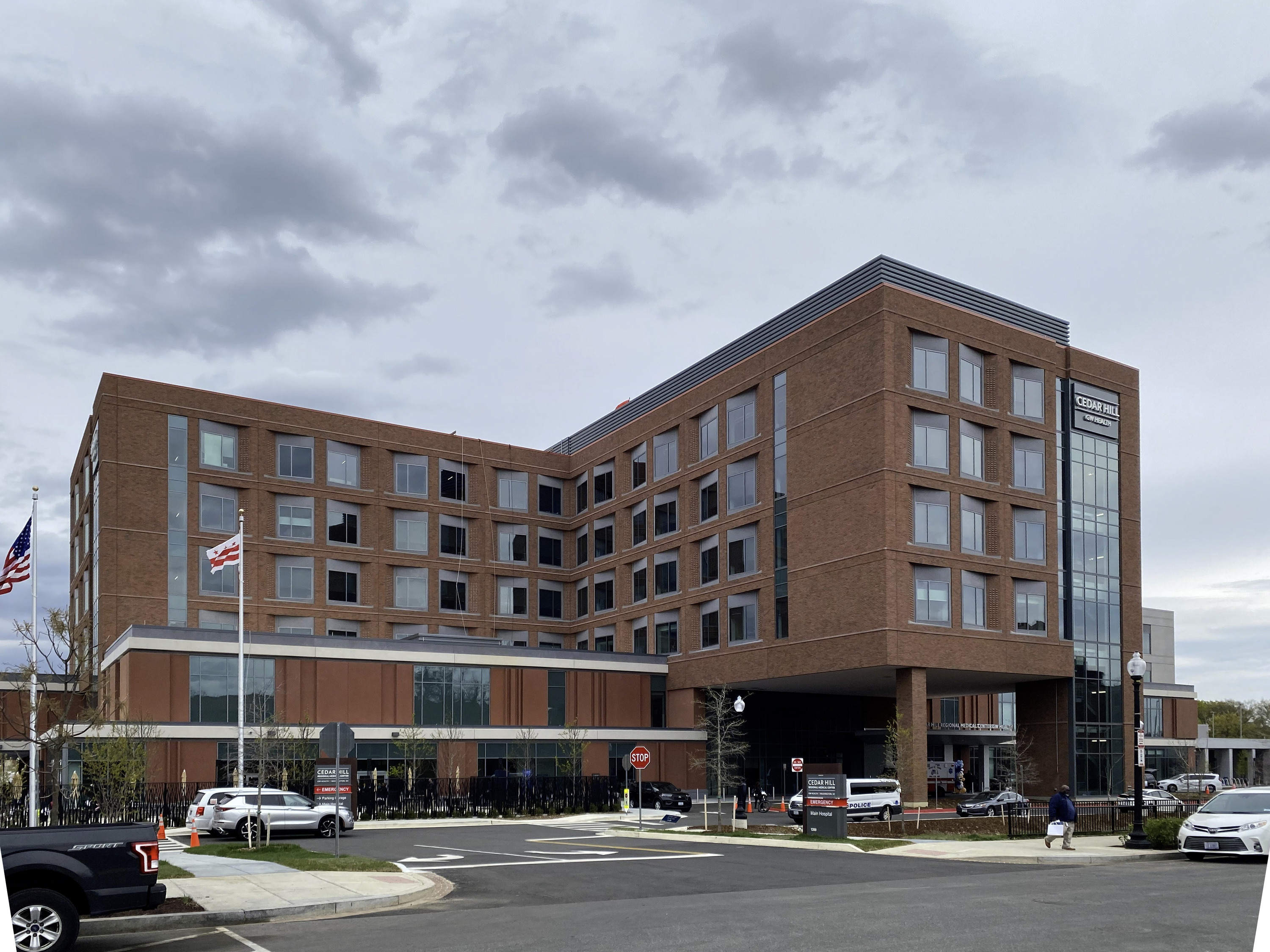
Cedar Hill Regional Medical Center | 2026 ACEC Metro Washington Honor Award
Cedar Hill Regional Medical Center reflects a transformative approach to healthcare access, design, and sustainability. The 407,000-square-foot hospital was built on a steep hillside with a metro tunnel and a major thoroughfare bordering its east and west edges with an FAA flight path overhead restricting building’s height. To balance operational efficiency, budget, and community impact, the team developed more than two dozen layout options. An innovative tool was created to interpret occupancy plans, apply structural load criteria, incorporate real-time updates, and confirm pricing for steel and concrete quantities. A second custom tool leveraged iterative modeling and data analytics to evaluate numerous potential layouts for moment frames. Walter P Moore’s innovation to digital tools played a pivotal role in achieving architectural intent while prioritizing community impact over typical goals like cost and efficiency.