
Urban infrastructure performs best when designed for both peak demand and daily use. Flexible, integrated systems improve safety, mobility, and user experience, helping cities adapt to surge events while enhancing everyday life.
Key Takeaways
- Design for variability, not averages
- Flexibility strengthens system resilience
- Pedestrian-first design supports both daily and peak demand
- Integrated infrastructure enables seamless performance
- Everyday usability is the true benchmark
Overview
Cities tend to be designed for consistency. Daily commutes. Predictable transit volumes. Regular pedestrian patterns. But global events—from international sports tournaments to major cultural celebrations—expose a very different condition: surge.
Global events like the World Cup place immediate pressure on urban systems, bringing thousands of visitors into concentrated areas and testing how well infrastructure performs under peak demand.
Designing Beyond the Average Day
Traditional infrastructure planning often optimizes steady flow. Roadways, sidewalks, transit stops, and public spaces are typically calibrated around average conditions. Surge events challenge those assumptions.
A World Cup match can bring thousands of people into a single area within a short window. Pedestrian volumes increase dramatically, decision-making becomes more complex, and safety depends on how clearly and intuitively spaces function.
The systems that succeed during these moments aren’t built only for events. They’re designed with flexibility, clarity, and redundancy, qualities that allow infrastructure to adapt under pressure while improving performance every day.
From Vehicular Corridor to Pedestrian System
In downtown Houston, the Main Street Promenade offers a useful case-in-point. Initially shaped by temporary street closures during the pandemic, the project evolved into a permanent reconfiguration of a seven‑block pedestrian corridor, prioritizing accessibility, safety, and adaptability. The Main Street Promenade, a project for Downtown Houston+, creates a safe, intuitive, and welcoming environment for people to experience downtown and connect to regional destinations.
While not designed exclusively for the World Cup, the promenade reflects principles that matter during surge conditions:
- Clear and continuous pedestrian routes that support intuitive movement
- Flexible space that accommodates daily use and large crowds
- Integrated systems - including drainage, lighting, and shade - that enhance comfort and safety
- Coordination with adjacent transit system, including the METRORail, to enable sufficient movement to and from major destinations
What makes projects like this notable is not their event-readiness alone, but how well they serve steady, everyday use while remaining capable of absorbing peak demand.


Engineering That Enables the Public Realm
Beneath the visible transformation is a layer of civil engineering coordination that allows the corridor to perform reliably across a range of environmental, operational, and demand conditions.
Even as the corridor prioritizes people, it continues to accommodate critical urban systems. Fire access is maintained across every block, supported by paving systems designed to meet structural requirements while preserving the continuity of the pedestrian experience.
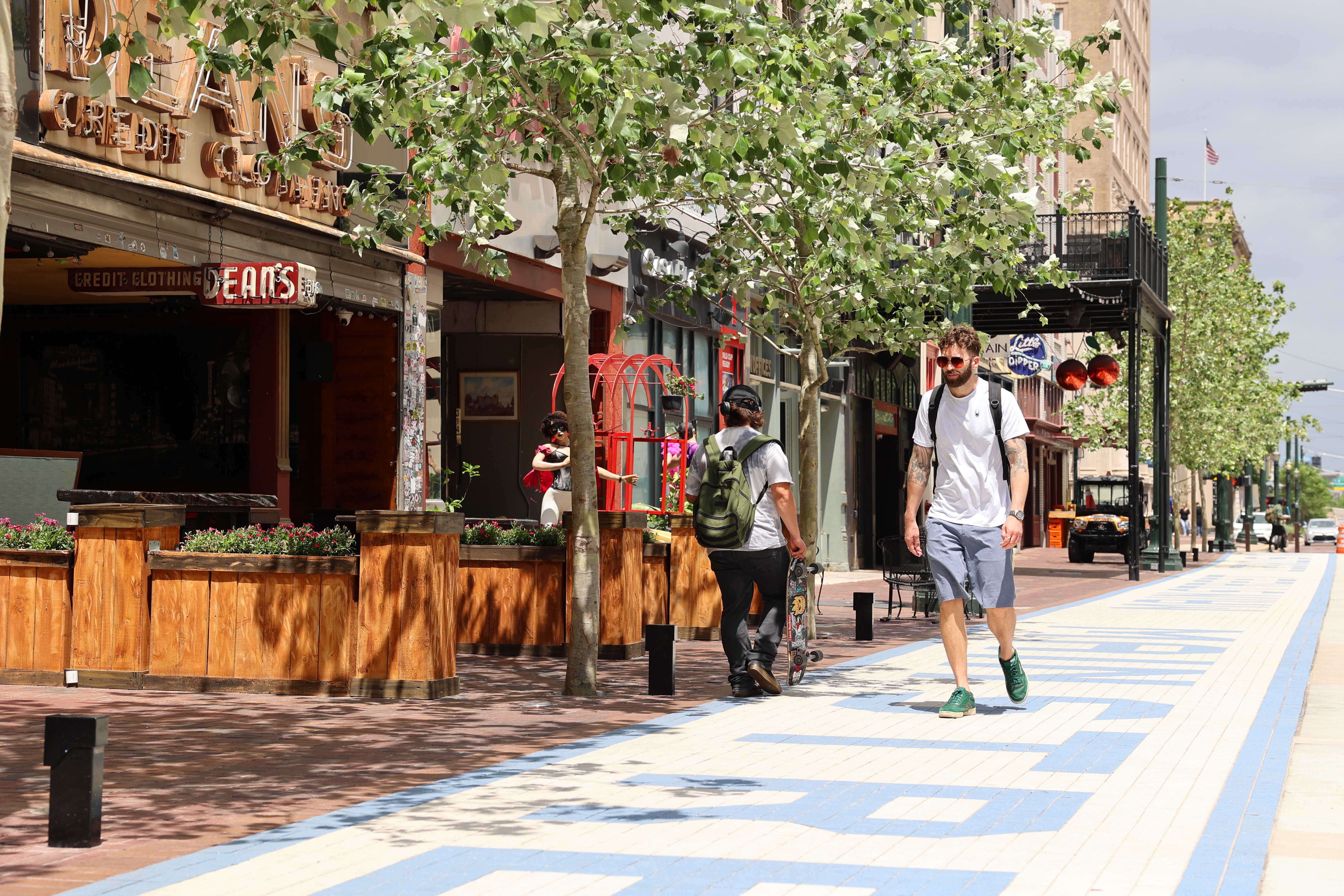
Beneath the visible transformation is a layer of engineering coordination that allows the corridor to perform under changing conditions. Safety, accessibility, transit integration, and pedestrian movement all had to work together seamlessly, not just during high-profile events, but every day. That balance between flexibility and reliability is what allows spaces like this to absorb increased demand without losing functionality.
The organization of the corridor prioritizes intuitive movement and accessibility, helping reduce friction as pedestrian volumes increase. These design decisions may feel subtle to users, but they play a major role in how public spaces perform during both everyday conditions and peak activity.
Layering Experience Through Design Collaboration
Beyond performance, projects like the Main Street Promenade also shape how people experience a city during major moments. Collaborating with Design Workshop, the corridor integrates landscape, materiality, and wayfinding elements that reinforce identity while helping visitors navigate intuitively through the space. These details contribute to an environment that feels both functional and welcoming under increased activity.
Together, these elements enhance the user experience while reinforcing the legibility and performance established through the underlying engineering.
Designing for the Extreme Improves the Everyday
Surge conditions often reveal how well infrastructure truly performs. Systems designed with flexibility, clarity, and user experience in mind tend to adapt more effectively—not just during major events, but in everyday urban life.
Projects like Main Street Promenade demonstrate that the most effective investments do more than handle peak demand; they create safer, more comfortable, and more resilient urban environments every day.
The true measure of infrastructure isn’t how it performs under ideal conditions; it’s how reliably it supports people, movement, and operations under changing demands.


