
This content was also featured in Building Design + Construction
Key Takeaways
- Water management ties performance to evolving scalable metrics
- Stewardship is about matching water sources to demands
- Planning for future growth is key to sustainable water strategies
Overview
Houston, Texas, is caught in the middle of a water supply paradox. While the city receives abundant rainfall, it is vulnerable to freshwater supply shortages due to regional population growth. This impacts how local planning projects think about building systems, research endeavors, landscape identity, and other aspects of daily life.
Rice University, a comprehensive research university in Houston, recognized these pressures and engaged Walter P Moore to develop a holistic water management and resilience plan to address water scarcity on its campus before it became a constraint. The goal went beyond fixed reduction targets to evaluate tradeoffs, understand operational realities, and develop a strategy that would remain sustainable for the long term.
Setting Goals That Scale
Water demand changes with campus size and performance, so a single cap on total consumption, while simple, loses meaning in an advancing world. Instead, the water plan tied performance to scalable metrics—such as water use per square foot, per irrigated acre, or per campus user—allowing progress to be measured consistently even as the campus evolves.
The team grounded its analysis in studying current operations, combining metering data with input from campus facilities teams to map where potable water is used and where intervention matters most. The analysis reaffirmed that effective water management requires more than reducing overall consumption. It requires matching water source characteristics— reliability, cost, timing, quality, and storage needs—to specific campus demands.
Matching Supply to Demand
Water stewardship is not simply about identifying alternative supplies, but understanding which sources are best suited for specific operational demands. Rainwater is well suited for irrigation but occurs intermittently, making storage a key challenge. A campus also requires additional stormwater detention as it grows. By integrating weather-smart control systems, detention systems can also support water reuse—capturing stormwater for irrigation and reducing potable water demand without additional infrastructure.
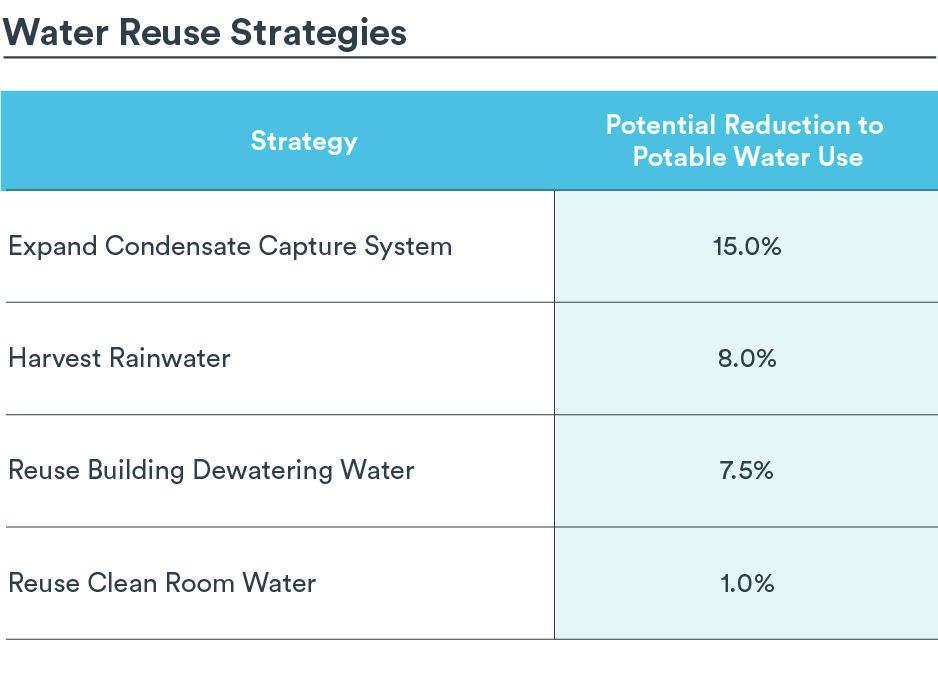
Building dewatering systems, while typically unseen to the public, provide a steady flow that aligns with continuous campus demands such as cooling towers. Our study found that one existing building dewatering system could offset approximately 7.5% of annual campus water use, with a payback period of just over three years. These systems also reduce storage and infrastructure demands because the supply is used almost immediately.
Planning for What Comes Next
With these strategies identified, the next challenge was understanding how they would perform as the campus grows. For instance, expanding building square footage increases cooling demand. That may also create opportunities for additional condensate capture, which is well suited to cooling tower makeup.

Another strategy is to plan for changes in landscape that affect irrigation demand to include design that creates new opportunities for rainwater storage modeling to evaluate how future growth, climate conditions, and operational changes could affect both water demand and alternative supply availability over time. This approach helped identify strategies with the greatest long-term impact, operational feasibility, and resilience value.


From Strategy to Action
The result is a roadmap that sets scalable performance targets and defines how to achieve them. Strategies such as expanded condensate capture, environmentally responsive irrigation systems, enhanced submetering and monitoring and leak detection are being implemented across campus.
For Rice University, resilience does not mean using less water at all costs. It means recognizing water as an asset and aligning supply, demand, and system performance more effectively over time. Stewardship means delivering the right water, in the right place, at the right time.


