
Preparing cities for global events depends on how systems work together, transportation, public space, utilities, and safety. Coordinated, people-first infrastructure supports both everyday use and peak demand without disruption.
Key Takeaways
- Global events test how systems perform together
- People-first design supports everyday use and peak demand
- Targeted improvements can drive citywide impact
- Coordination enables flexibility at scale
Overview
Preparing a city for a global event like the World Cup is rarely about a single project. It is about how transportation, public space, utilities, drainage, and safety systems work together, often under compressed timelines and intense public scrutiny.
In downtown Houston, projects like the Main Street Promenade and the Cool & Connected Corridors initiative show what that kind of coordination looks like in practice. Together, they demonstrate how cities can prepare existing infrastructure to support global events while continuing to serve everyday use.
More Than a Street Project
Main Street Promenade reimagines seven blocks of downtown roadway as a pedestrian-first corridor, permanently converting space once dedicated to vehicles into a more flexible public realm. The project prioritizes connectivity, accessibility, and safety while remaining compatible with the systems that continue to shape how the corridor functions every day, most notably the METRO light rail that runs alongside it.
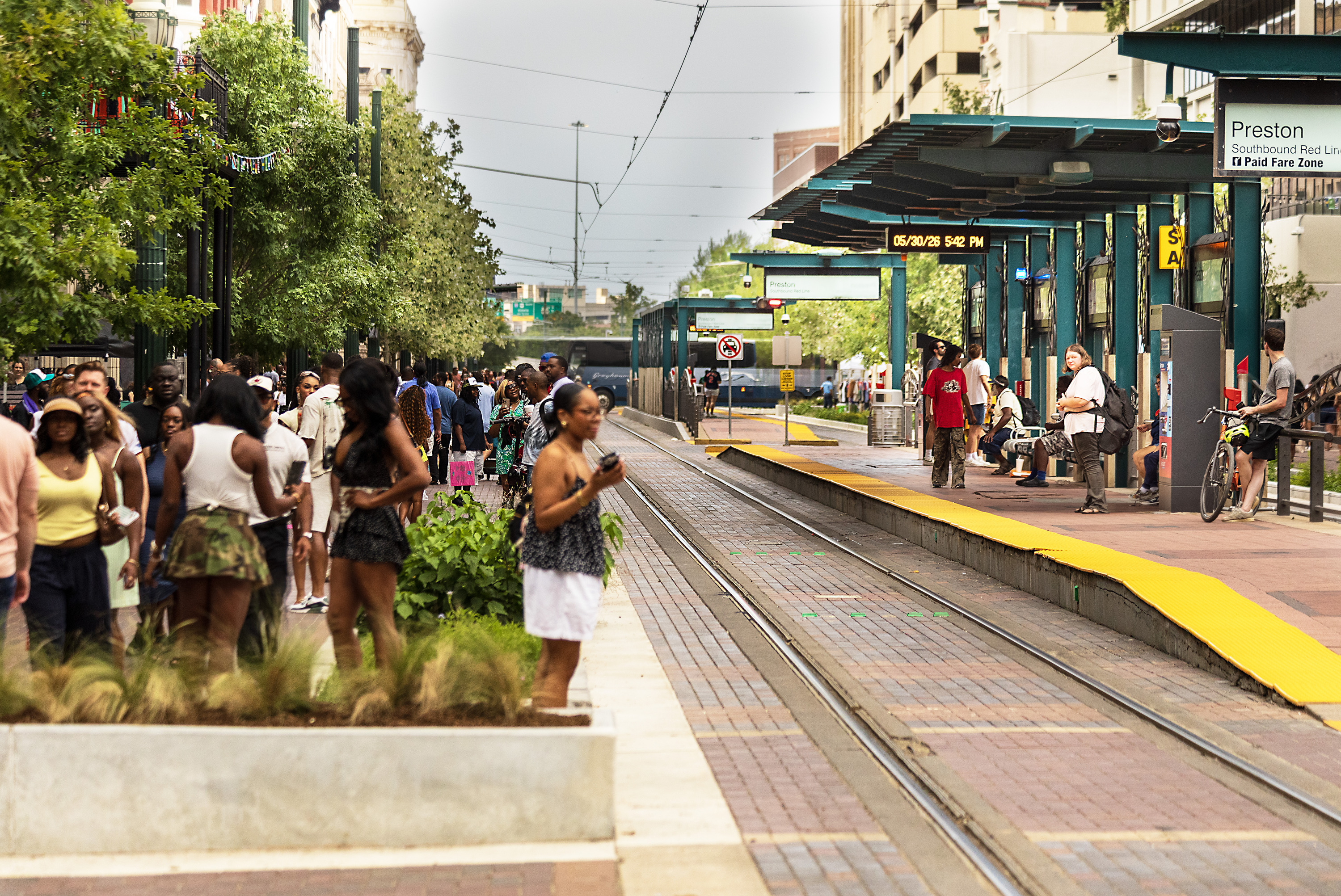
Projects like this require extensive coordination across agencies, disciplines, and existing infrastructure. While the goal was to create a more pedestrian-oriented environment, the corridor still supports transit operations, emergency access, routine maintenance, and utilities. Integrating these systems allows critical services to continue functioning while prioritizing pedestrians.
That same approach extends beyond a single corridor. Across downtown, complementary projects apply similar principles at different scales, strengthening connectivity, improving comfort, and coordinating underlying systems to support both everyday use and increased activity during major events.
Extending Connectivity Across Downtown
While Main Street establishes a strong north–south pedestrian spine, the Cool & Connected Corridors project expands connectivity east–west across downtown, intentionally linking key streets back to the promenade.
Developed as part of Downtown Houston+’s broader public realm strategy, the initiative focuses on enhancing pedestrian movement along Texas Avenue, with additional corridors planned along McKinney and Preston streets. Together, these connections improve access across downtown and toward East Downtown, and home to World Cup Fan Fest activities.
Rather than full reconstruction, the project introduces targeted streetscape improvements, including shade structures, landscaping, lighting, and streetscape enhancements, applied strategically along certain blocks to improve comfort and continuity.
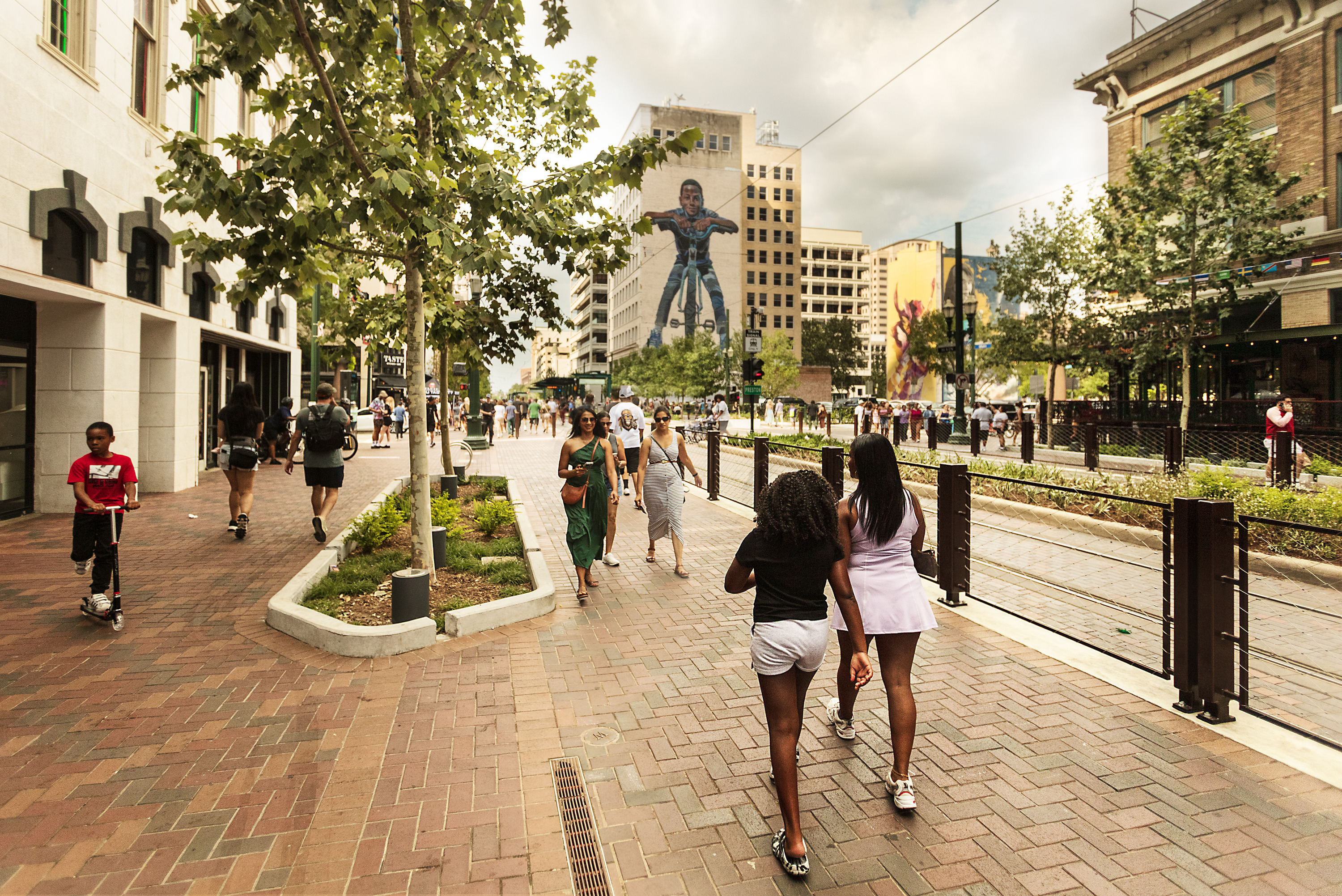
In some locations, shade structures are introduced at intersections where trees cannot be placed due to visibility requirements. These areas function as points of refuge, allowing pedestrians to wait comfortably while maintaining clear sightlines for vehicles and transit operations.


Coordination in Practice
Preparing downtown corridors for high pedestrian activity requires far more than widening sidewalks. The corridor had to align multiple systems so it could perform reliably under both everyday conditions and periods of increased activity.
Key considerations included:
- drainage and utilities that support long-term resilience
- lighting and visibility that enhance safety day and night
- shade structures and tree canopies that improve comfort in Houston’s climate
- protective barriers and clear edge conditions that allow space to flex between routine use and larger gatherings
- wayfinding that supports intuitive movement for visitors unfamiliar with downtown
Each of these elements functions independently, but overall performance depends on coordination.

Why It Matters
Global events place city systems under stress. Crowds grow denser. Arrival and departure windows tighten. Safety expectations increase. Small breakdowns in circulation, access, or operations become much more visible when cities are performing on an international stage.
Projects like Main Street Promenade and Cool & Connected Corridors show how investments made for long-term civic value can also support short-term peak demand.
These corridors were not designed for a single moment. They were designed to serve the city every day, which is precisely what makes them valuable during major events.
Cities that invest in adaptable, people-first infrastructure, supported by well-coordinated systems, are better positioned to host global events without disrupting everyday life.
What Comes Next
As cities across North America prepare to welcome international audiences, success will depend less on spectacle and more on coordination.
The lessons from Main Street Promenade and Cool & Connected Corridors are straightforward: infrastructure that performs well during major events is infrastructure that was designed to work well every day.
That kind of preparation leaves a lasting impact long after the final match.


