
Upgrading existing stadiums for the World Cup requires adapting NFL venues to FIFA standards within fixed constraints. Targeted modifications to seating, field systems, and circulation enable compliance while preserving long-term performance.
Key Takeaways
- Existing conditions drive design decisions
- Field dimensions and clearances reshape the seating bowl
- Precision modifications maintain structural integrity
- Sub-air and field systems enable FIFA-level performance
- Coordination across disciplines is critical in constrained environments
- Renovations must support both tournament demands and long-term use
Overview
Since 2006, I’ve had the opportunity to work on repair and renovation projects at GEHA Field at Arrowhead Stadium. Each season, the work has been focused on improving the game-day experience for Chiefs fans. Preparing the stadium for the World Cup introduces a different kind of challenge—and one I’m proud to see the venue take on as it welcomes a global audience.
Upgrading an existing stadium for the World Cup is not a typical renovation. It requires adapting a venue built for one set of standards into a facility that meets a different set of global requirements, all within tight physical and operational constraints.
Unlike new construction, these projects must work within the realities of an existing structure. Geometry, sightlines, circulation, and structural systems are already defined. In many cases, they were never intended to support World Cup play.
At GEHA Field at Arrowhead Stadium, preparation centered on a fundamental shift: accommodating a larger soccer pitch within an existing NFL stadium footprint.
Adapting the Bowl
One of the primary challenges in World Cup preparation is meeting FIFA’s field dimensions and clearance requirements. These standards directly affect the seating bowl, particularly along the sidelines.
At Arrowhead, structural modifications were implemented along the north sideline to achieve the required clearances for a regulation soccer pitch. These changes were not cosmetic. They required coordinated intervention in the structural system to create space without compromising performance or constructability.
What appears to be a simple adjustment in plan becomes a highly coordinated effort when working within an existing stadium.
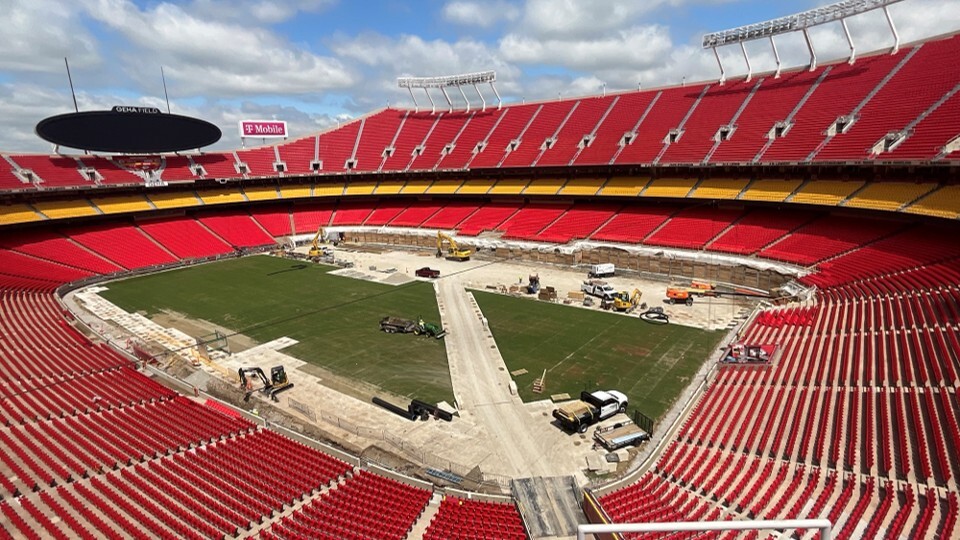
Even before Kansas City was awarded World Cup games, Walter P Moore and Kansas City Chiefs facility leaders met to consider options for fitting a FIFA regulation pitch within the constraints of the nearly 50-year-old stadium. Like most football venues, widening the field—including the walls—was required to accommodate corner kicks and media requirements under FIFA standards. After evaluating multiple options, the team chose to widen only along the north sideline. This approach reduced cost and avoided major impacts to the player tunnel and south sideline entry.
Working Within Constraints
Renovating for global events highlights how tightly optimized existing stadiums already are. There is very little excess space, and every structural element serves a purpose.
Modifications must be precise. Removing, shifting, or altering structural components requires careful evaluation of load paths, constructability, and sequencing.
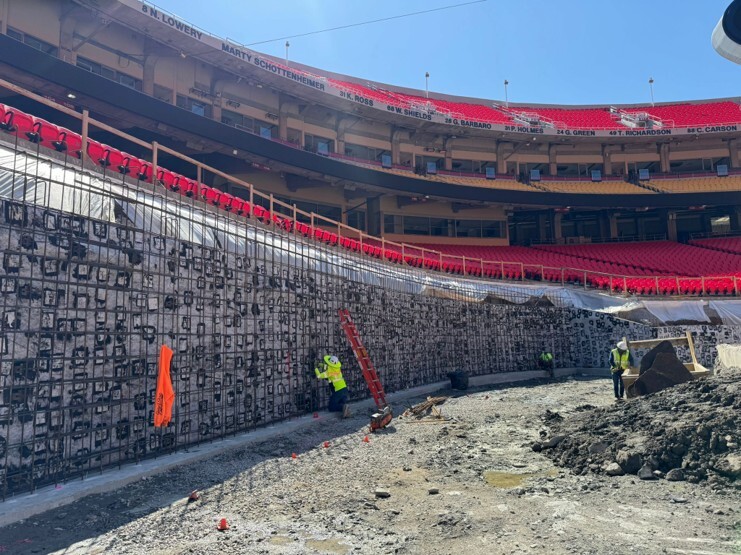
At Arrowhead, updates extended beyond a single intervention. Adjustments to the seating bowl had to align with field layout, sightlines, and operational requirements while maintaining structural integrity.
Unlike most host venues, Arrowhead is an open-air stadium with a pronounced crown at the center of the field for drainage. Meeting FIFA pitch standards required lowering the center of the field, which affected surrounding elements including the walls and tunnel. This required careful coordination between the construction team and Walter P Moore engineers to integrate new field elevations within the existing structure.


More Than the Field
World Cup readiness extends beyond the playing surface. Venue upgrades must also support broadcast requirements, branding, and the overall event experience.
At Arrowhead, structural work was coordinated with broader venue updates to meet these operational and presentation needs.
One example is the design and construction of a new sub-air room. This space accommodates the field ventilation system required to meet FIFA performance standards for the new pitch. Multiple locations within the stadium bowl were evaluated before selecting a site near the southeast tunnel.
The solution involved excavating a portion of the on-grade bowl using a top-down retention system. Coordination with MEP systems and existing utilities allowed for the creation of a new mechanical space without reducing seating capacity or impacting the fan experience.
Even when the structural scope is targeted, the work must integrate with a broader set of event-driven requirements.

Building for a Moment and Beyond
Renovating for the World Cup prepares a stadium for a global moment, but the implications extend well beyond the event.
The same interventions that enable compliance with FIFA standards must also support long-term use. That includes maintaining flexibility for future events and ensuring that modifications integrate cleanly with the existing structure.
At Arrowhead, the work reflects that balance. It meets the requirements of an international tournament while preserving the character and performance of a long-standing venue.
Successfully renovating for the World Cup is not just about meeting new requirements. It is about integrating those requirements into an existing system in a way that performs, adapts, and endures.
